The Water Resources Commission (WRC) has raised serious concerns about the inadequate number of river gauges across Ghana, warning that the shortfall is undermining effective monitoring, planning, and management of the country’s water resources.
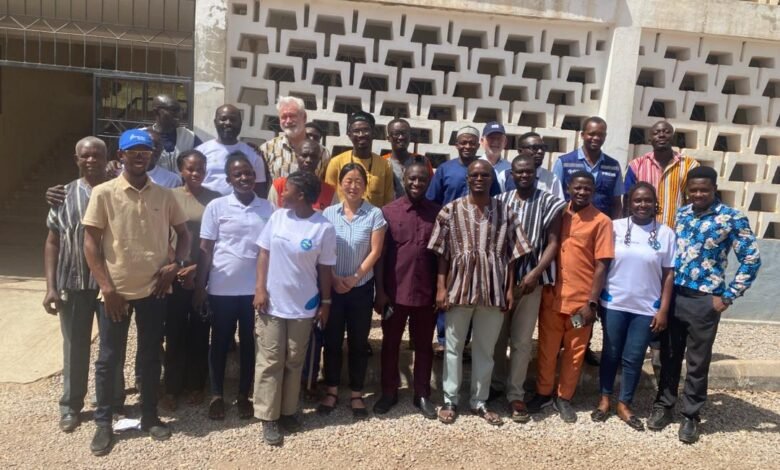
The concern was highlighted during a sensitisation workshop organised in collaboration with Blue Deal for journalists and media practitioners in Bolgatanga, aimed at strengthening media capacity in water resource reporting.
Speaking at the workshop, the Head of the White Volta Basin, Jesse Kazapoe, indicated that the limited number of river gauges—essential instruments used to measure water levels and flow—remains a major challenge across Ghana’s river systems and their tributaries.
According to him, the absence of reliable hydrological data is affecting critical areas such as water supply planning, irrigation development, and flood preparedness.
“Before you can determine how much water to treat for consumption or allocate for irrigation, you must first know how much water exists in the system,” Mr. Kazapoe stated. “Without reliable data, planning becomes guesswork.”
River gauges play a crucial role in quantifying freshwater resources by providing real-time data that guides decision-making on water use for domestic, agricultural, and industrial purposes. However, the WRC notes that many tributaries, particularly within the White Volta Basin, remain largely ungauged.
This, Mr. Kazapoe explained, makes it difficult to determine their contribution to overall water availability and complicates efforts to design and implement development projects.
“If we want to develop irrigation schemes or water supply systems along these tributaries, we first need accurate data on their water yield. Unfortunately, that data is not readily available,” he added.
The Commission further underscored the importance of river gauges as early warning systems for floods. A well-coordinated network enables authorities to monitor rising water levels upstream and predict downstream impacts, giving communities valuable time to prepare.
“In the event of flooding, gauges upstream can give communities downstream a two- to three-hour window to prepare and protect lives and property,” the Commission noted, cautioning that the absence of such systems leaves many communities exposed to risk.
Beyond safety concerns, the lack of a comprehensive gauging network is also increasing the cost of water-related projects. Without sufficient historical data, agencies are often required to commission fresh hydrological assessments before project implementation.
“If we had adequate data from functioning gauges, we could design projects remotely and move straight to implementation. Instead, we spend additional resources on consultants to conduct new hydrological studies,” Mr. Kazapoe explained.
The WRC emphasised that expanding the river gauging network is essential for long-term environmental sustainability, as continuous monitoring supports informed policymaking, protects river ecosystems, and strengthens national water security.
It has therefore called for increased government investment and stronger collaboration among stakeholders to address the gap.
“As a country, we cannot manage what we do not measure,” the Commission stressed. “Improving our river monitoring systems is not optional—it is essential.”
Source: BlueWaves Radio 93.7 FM/ Maurice Duncan