Two newly posted medical doctors who reported to the Upper East Region have left the region to seek reposting to the Northern Region after their request to work at the regional hospital was not granted, deepening concerns about the persistent challenge of attracting and retaining medical professionals in the area.
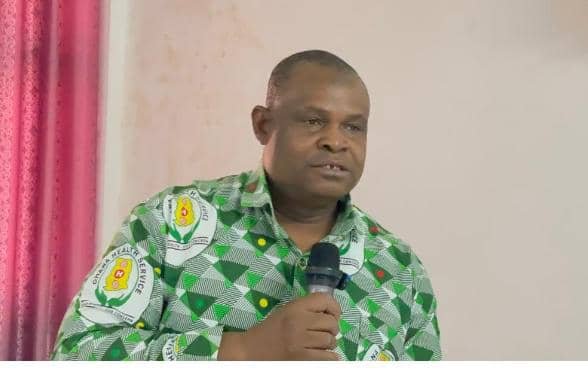
The disclosure was made by the Upper East Regional Director of Health Services, Dr. Braimah Baba Abubakari, during a briefing when the Minister for Health, Kwabena Mintah Akandoh, visited the regional hospital in Bolgatanga as part of his working tour of the Upper East Region.
According to Dr. Abubakari, the region had anticipated a significant boost in its medical workforce following the posting of 27 doctors this year. However, the expectation fell short as only seven doctors reported to the region, with just five agreeing to stay.
“Out of the 27 doctors posted to the Upper East Region, only seven showed up. Two of them said that if they were not posted to the regional hospital, they would go back, and indeed they have gone and found themselves in the Northern Region,” he explained.
He noted that the situation underscores a long-standing difficulty in attracting and retaining doctors, particularly in districts outside the regional capital.
Health Infrastructure and Staffing Gaps
Providing an overview of the region’s health landscape, Dr. Abubakari said the Upper East Region, one of Ghana’s 16 administrative regions, has a population exceeding 1.42 million people spread across 15 districts.
The region currently has eight public hospitals—seven under the Ghana Health Service and one operated by the Christian Health Association of Ghana (CHAG) in Bawku—alongside 17 private hospitals and 45 private clinics.
In addition, there are 79 health centres and 529 functional Community-based Health Planning and Services (CHPS) zones. However, only 262 of these CHPS zones have permanent compounds, leaving a wide infrastructure gap that affects service delivery, especially in rural communities.
Despite these facilities, the region continues to face an uneven distribution of doctors. Dr. Abubakari revealed that there are currently 105 doctors serving the entire region, with more than half—59 doctors—stationed at the regional hospital in Bolgatanga, including four of the newly posted doctors. The remaining doctors are spread across other districts, many of which remain critically understaffed.
He noted that the doctor-to-population ratio has improved to about one doctor to 14,000 people in 2025, compared to one doctor to approximately 17,000 people the previous year. However, he stressed that the improvement has not translated into equitable access across districts.
Operational and Security Challenges
Dr. Abubakari further outlined several operational challenges confronting healthcare delivery in the region, including inadequate numbers of critical staff, lack of accommodation for health workers, limited transport, and shortages of essential medical equipment in many facilities.
He also drew attention to the impact of ongoing chieftaincy conflicts in parts of the region, particularly within the Bawku enclave. According to him, these conflicts continue to disrupt health service delivery, placing health workers in difficult and sometimes dangerous situations.
“Some of our staff have continued to work even when gunshots were being heard in their communities,” he said, commending their dedication and sacrifice.
Way Forward
To improve healthcare delivery, the regional health director outlined several key priorities. These include the recruitment of more critical health professionals and support staff, provision of vehicles to health facilities, financial clearance for physician assistants, and the introduction of incentive packages for staff working in deprived and conflict-prone areas.
He also appealed for support to strengthen residency training at the regional hospital and to improve infrastructure and services across health facilities in the region.
The latest development, marked by the departure of newly posted doctors, has once again brought to the fore the urgent need for targeted interventions to make the Upper East Region more attractive to medical professionals and to ensure equitable healthcare access for its growing population.
Sourc: BlueWaves Radio 93.7 | Maurice Duncan