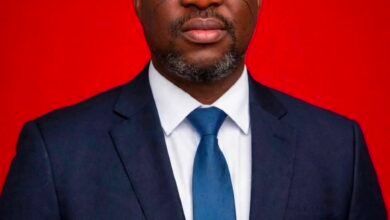
Financial Economist, Dr. Emmanuel Opoku, has urged the government to adopt prudent economic policies and prioritize investment in agriculture as Ghana gradually transitions from its International Monetary Fund (IMF) support programme.
Speaking on BlueWaves Breakfast, Dr. Opoku reflected on Ghana’s economic history and stressed the importance of learning from previous economic challenges to avoid repeating past mistakes.
According to him, Ghana’s economic experiences between 2001 and 2009, as well as periods around 2008 and 2012, provide valuable lessons for policymakers and current leaders. He emphasized that governments must study previous economic downturns and policy decisions carefully in order to build a stronger and more resilient economy.
“What happened in 2001 to 2009? What happened in 2008 and 2012? We must learn from those things and build upon them. That’s how governments are supposed to behave,” he stated.
Dr. Opoku expressed confidence that the current administration is determined to improve the country’s economic situation and not merely remain passive in the face of economic pressures.
“I don’t think this government came to just play. They came to work,” he remarked during the discussion.
However, he cautioned that Ghana’s economy remains highly vulnerable to external economic forces, making it difficult for governments to fully stabilize the economy without strong internal production systems.
He noted that the country’s overdependence on market-based economic activities, while neglecting agriculture and local production, continues to weaken economic growth and increase inflationary pressures, especially in food prices.
According to the economist, sustainable economic growth cannot be achieved if agriculture is sidelined, since food production remains the backbone of every thriving economy.
“We are rather investing in the market instead of investing in agriculture that will bring foodstuff to the market and make the market grow,” he explained.
Dr. Opoku further questioned the logic of expanding market activities without ensuring adequate food production and supply to sustain commercial activities.
“When there’s a market and there’s no foodstuff, who is going there to buy or sell?” he quizzed.
He stressed that strengthening the agricultural sector would not only improve food security but also stabilize prices, create employment opportunities, and reduce Ghana’s dependence on imports.
His comments come at a time when discussions surrounding Ghana’s economic recovery, debt restructuring efforts, and future engagement with the IMF continue to dominate national conversations.
Economic analysts have repeatedly argued that Ghana’s long-term economic stability will depend largely on the country’s ability to increase local production, diversify its economy, and reduce excessive reliance on external financial support.
Source: BlueWaves Radio 93.7Fm/ Maurice Duncan/Bolgatanga