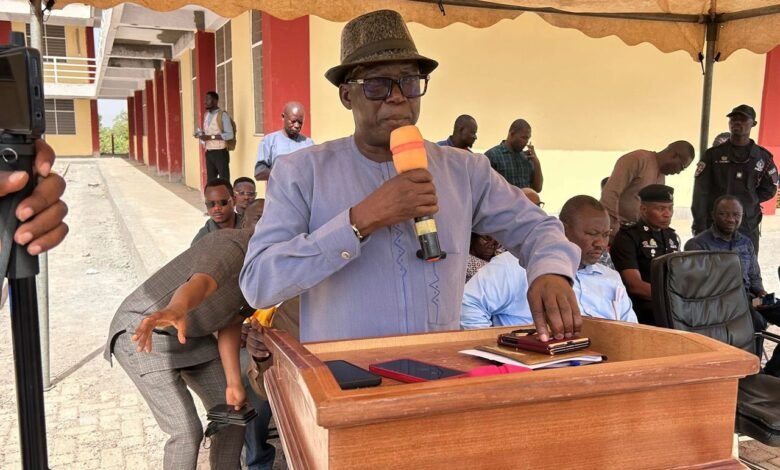
Bawku West, Upper East Region — The Upper East Regional Minister, Donatus Akamugri Atanga, has raised serious concerns over the state of educational infrastructure in the Bawku West District, revealing that a total of 104 schools are still operating under trees.
According to the Minister, the affected schools comprise 60 kindergarten institutions, 30 primary schools, and 14 junior high schools, a situation he described as deeply troubling and one that demands urgent intervention.
Hon. Atanga made this disclosure while addressing stakeholders on the challenges facing the education sector in the region. He emphasized that the lack of adequate classroom facilities continues to hinder effective teaching and learning, exposing pupils and teachers to harsh weather conditions such as intense heat and rainfall.
“The situation is not only unfortunate but unacceptable in this era of educational advancement,” he noted, stressing that children in the district deserve a safe and conducive learning environment comparable to their counterparts in other parts of the country.
The Minister further explained that the persistent infrastructure deficit in the district reflects broader developmental challenges confronting some rural communities in the Upper East Region. He assured residents that government remains committed to addressing the issue through targeted interventions, including the construction of new classroom blocks and the rehabilitation of existing structures.
Education stakeholders have long warned that studying under trees negatively affects concentration, attendance, and overall academic performance. During the rainy season, teaching and learning are often disrupted, while the dry season exposes pupils to extreme temperatures.
Hon. Atanga therefore called for collaborative efforts between government, development partners, and local communities to accelerate infrastructure development in the district. He underscored the need for sustained investment in education as a critical driver of socio-economic growth.
The revelation has once again brought to the fore the urgent need to bridge the infrastructure gap in deprived areas, as Ghana continues to pursue inclusive and equitable access to quality education for all.
Source: BlueWaves radio | Maurice Duncan