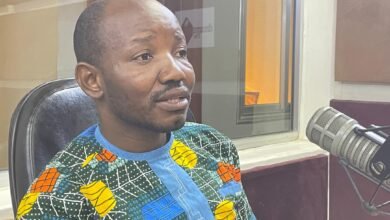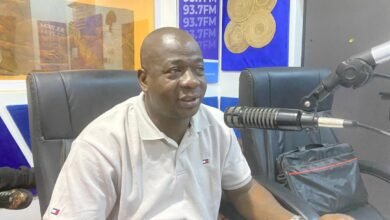
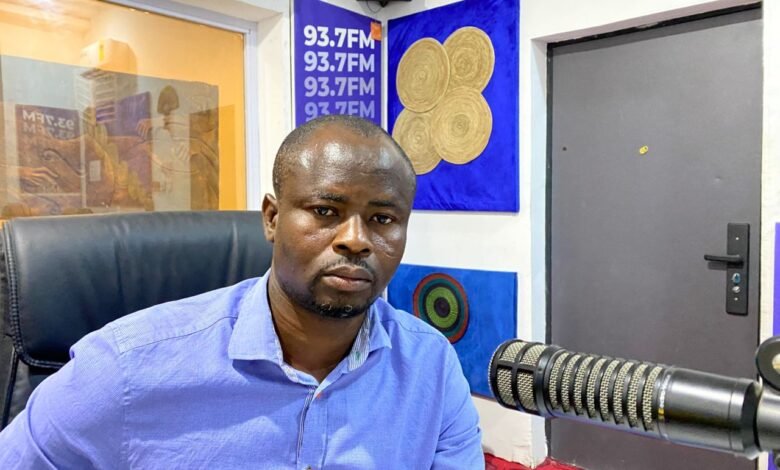
A member of the Upper East Regional Communications Team of the National Democratic Congress (NDC), Mr. Abubakari Ayariga, has accused the immediate past New Patriotic Party (NPP) administration of mismanaging Ghana’s economy and leading the country back to the International Monetary Fund (IMF) due to what he described as reckless spending and poor economic management.
Speaking on BlueWaves Breakfast Show on Monday, Mr. Ayariga argued that the economic challenges that compelled the previous government to seek IMF support did not begin with the COVID-19 pandemic, as often claimed by officials of the former administration.
According to him, there were already clear economic warning signs before the outbreak of the pandemic, indicating that the country’s economic fundamentals were weakening under the NPP government.
“You see, their problem is that they always want to cite COVID-19 and all that. But before COVID set in, there were already indicators suggesting that the economy and the figures were not looking good,” he stated.
Mr. Ayariga criticized what he described as the former government’s heavy reliance on data presentation while the actual economic realities on the ground continued to worsen.
He referenced former government communicators and officials who consistently defended the economy using statistics, insisting that the economic data at the time failed to reflect the struggles of ordinary Ghanaians.
“James Bobume wanted us to believe all the time about data, but the data concerning the government was not good,” he remarked.
The NDC communicator further accused the previous administration of taking advantage of the COVID-19 pandemic period to engage in excessive and questionable expenditure.
According to him, several spending decisions made during the pandemic lacked transparency and accountability, citing public concerns raised over food distribution exercises and procurement processes.
“We saw how they spent money during COVID, including food distribution to people on the roads,” he alleged.
Mr. Ayariga also referred to the controversy surrounding the procurement of Sputnik V vaccines during the pandemic, recalling comments made by the then Health Minister regarding the circumstances under which the vaccines were purchased.
“We even heard the then Health Minister say he was not thinking right, and for that matter, he was unable to properly bargain in the purchase of the Sputnik V vaccines,” he claimed.
He argued that the economic difficulties and eventual return to the IMF programme were a direct result of what he termed financial recklessness by the previous administration.
According to him, the NPP government had earlier projected itself as a strong administration that would not seek IMF assistance, only to eventually reverse course and request a bailout from the international lender.
“They claimed they were too proud to go to the IMF, but eventually they went. It was as a result of their recklessness,” he stressed.
Mr. Ayariga, however, maintained that the National Democratic Congress has a better record of managing the economy, even under difficult circumstances and IMF-supported programmes.
He recalled that the NDC administration inherited significant economic and infrastructural challenges when it assumed office, including problems within the energy sector.
According to him, the energy crisis popularly known as “dumsor” during 2014 and 2015 was largely the result of inherited structural problems rather than solely the fault of the Mahama administration.
“The NDC inherited a lot of mess and problems, especially in the energy sector. The 2014–2015 power crisis, which became known as dumsor, was an inherited problem that President John Dramani Mahama had to deal with,” he explained.
Mr. Ayariga insisted that despite the economic and structural challenges inherited by the NDC at the time, the party was able to stabilize the economy and eventually exit the IMF programme successfully.
His comments add to the growing political debate between the NDC and NPP over economic management, fiscal discipline, and responsibility for Ghana’s current economic challenges.
Source: BlueWaves Radio93.7Fm | Maurice Duncan/ Bolgatanga