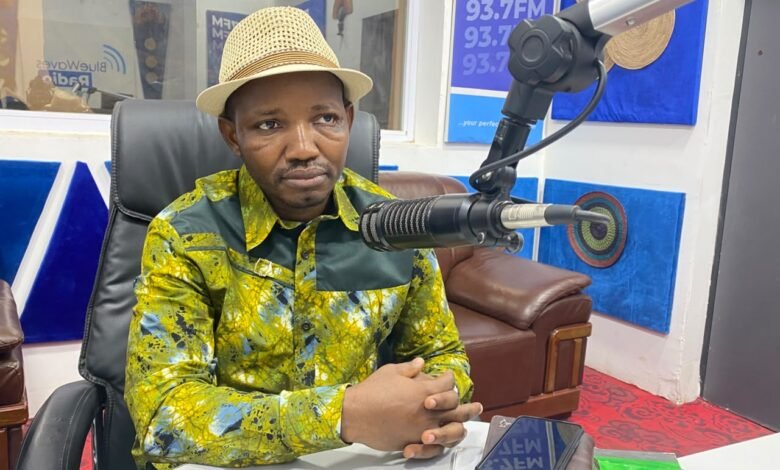
Stanley Abopam has urged voters in the Upper East Region to replace Members of Parliament they believe have failed to deliver, arguing that the prospect of losing office would make elected representatives more responsive to the region’s development needs.
Speaking on Blue Waves Radio’s morning show, Abopam said his call to “sacrifice” some MPs was about electoral accountability, not a demand for voters to abandon a political party. He cited Navrongo as an example of voters replacing a representative with another candidate from the same party.
“The context of the sacrifice may not necessary be to change party, but to change some people,” he said.
Abopam argued that voting out MPs perceived to have underperformed would send a message to those who succeed them: retaining a seat depends on meeting constituents’ expectations. He said the purpose was not to punish a government, but to encourage representatives to take development concerns seriously.
His central criticism was that, while MPs may secure projects for their individual constituencies, they have not worked together effectively on priorities affecting the wider region. He acknowledged that projects such as classroom blocks count as development, but said their collective regional impact remained difficult to see.
Abopam pointed to plans for a stadium, a polyclinic and a sports complex that he said had not materialised, despite the region having politicians in senior government positions at the time. He questioned whether the influence of prominent figures from the region was being brought together to advance shared priorities.
He also raised concern about a road he described as linking eight of the region’s 15 constituencies, asking why it continued to struggle when influential political figures represented areas along the route. His remarks framed the road as an example of a project requiring cooperation beyond individual constituency boundaries.
The discussion turned to the political labels applied to people who criticise elected officials. Abopam said that when one major party is in power, he is accused of supporting the other. He maintained that calls for development should not be dismissed on the basis of perceived party allegiance.
His appeal places a question before voters and their representatives: whether individual constituency projects are enough, or whether MPs should also be judged on what they achieve together for the Upper East Region.
By: Comfort Nmaah Adongo
Source: Mybluewavesonline.Com/ Maurice Duncan/ Bolgatanga