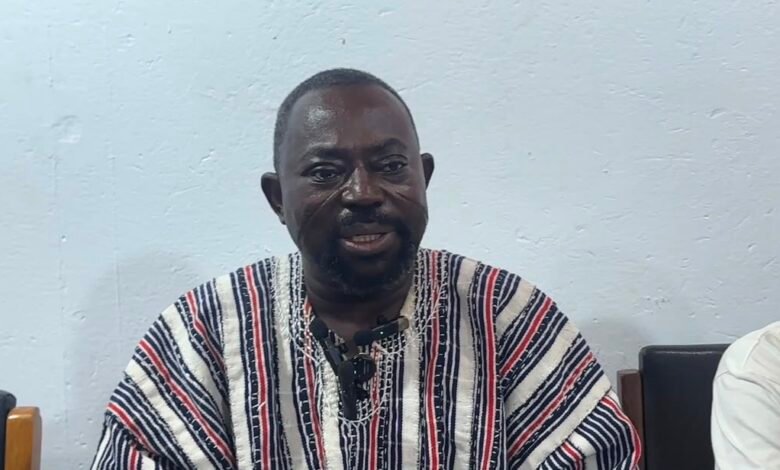
The Upper East Regional Communications Directorate of the New Patriotic Party (NPP) has strongly criticised the exclusion of the Upper East Region from the World Bank-funded $500 million Ghana Market Access and Connectivity Project (GMACP), describing the decision as unfair and difficult to justify for one of Ghana’s leading agricultural production hubs.
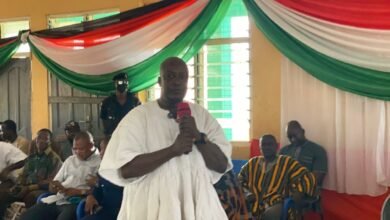
At a press conference held at the NPP Regional Office in Bolgatanga, the Upper East Regional Communications Officer, Peter Ayinbisa, expressed concern over what he described as the region’s omission from a flagship infrastructure project designed to improve agricultural productivity and market access.
According to him, the Ghana Market Access and Connectivity Project is expected to rehabilitate climate-resilient feeder roads to enhance the transportation of agricultural produce, reduce post-harvest losses, lower transport costs, and improve the incomes of farmers across participating regions.
Mr. Ayinbisa explained that a memorandum submitted to Parliament by the Minister for Finance, Dr. Cassiel Ato Forson, seeks parliamentary approval for the World Bank financing to rehabilitate approximately 1,050 kilometres of feeder roads across 13 beneficiary regions. He, however, questioned why the Upper East Region, widely recognised for its significant contribution to Ghana’s food production, was left out of the initiative.
“The exclusion of the Upper East Region from this important intervention is deeply worrying, particularly when the region remains one of the country’s major food baskets,” he said.
He highlighted the region’s immense agricultural potential, citing Builsa South District as a major producer of rice and maize, Bongo District for millet, sorghum and vegetables, and the Bawku enclave for its large-scale production of onions, tomatoes and peppers supplied to markets across northern Ghana and neighbouring Burkina Faso.
Mr. Ayinbisa argued that farmers in the Upper East Region continue to struggle with poor feeder roads, which increase transportation costs, reduce farm-gate prices and contribute significantly to post-harvest losses—challenges the Ghana Market Access and Connectivity Project was specifically designed to address.
He questioned the criteria used in selecting the beneficiary regions, insisting that if agricultural production, feeder road deficits, market accessibility and post-harvest loss reduction formed the basis for the selection, then the Upper East Region unquestionably deserved to benefit.
“If agricultural production, feeder road deficits, market accessibility and the reduction of post-harvest losses form the basis for selecting beneficiary regions, then the people of the Upper East Region deserve a clear explanation as to why our region has been excluded from this laudable project. We further call upon the Upper East Caucus in Parliament to account to the people of this region regarding the efforts made to secure our inclusion in this important national intervention,” Mr. Ayinbisa stated.
He further appealed to the Government of Ghana, the World Bank, the Upper East Caucus in Parliament, the Upper East Regional Minister, traditional authorities, civil society organisations, farmer groups and the media to collectively advocate for a review of the beneficiary list to ensure the region’s inclusion.
Mr. Ayinbisa maintained that the demand was not motivated by politics but by the need for equitable national development and fair distribution of development interventions.
“This is not a request for special treatment. It is a call for fairness, equity and inclusive national development,” he stressed.
The Ghana Market Access and Connectivity Project forms part of broader efforts to strengthen rural infrastructure, improve market connectivity and enhance the resilience of Ghana’s agricultural sector. The NPP Communications Directorate believes excluding the Upper East Region risks undermining these objectives, given the region’s strategic role in ensuring national food security.
Source: MyBlueWavesonlin.com| Maurice Duncan | Bolgatanga