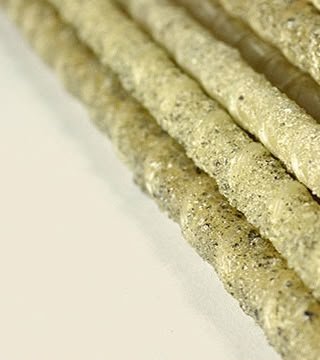
Manufacturers of Viva fiberglass bar have intensified efforts to expand the use of glass fibre reinforced polymer (GFRP) reinforcement beyond major supervised projects, telling artisans and engineers in the Upper East regional capital that the material is ready for wider adoption in ordinary construction.
Speaking at an awareness and education engagement at Tap Hotel on Saturday, 24 October 2026, a representative of Viva and Kogan Limited said the company has produced the bars in Ghana since 2017. For years the product was largely confined to Accra and large projects under strict structural engineering oversight. That phase, he said, is over.
“It has already been studied, and structural engineers and the building industry already have enough knowledge to start using it in mass construction,” the representative told participants. He noted that Viva bars have been deployed in about 10,000 projects across Ghana and parts of East and West Africa as an alternative to conventional iron rods.
Local availability is no longer a barrier. An agent based in Bolgatanga keeps stocks ready for immediate supply in any quantity required. The company has also begun producing bent and curved bars, removing earlier limitations on application. In waterlogged or aggressive soil conditions, the representative said, structures can now be built entirely without steel.
The product is known internationally as glass fibre reinforced polymer bar. Viva markets its version under the brand name Viva fiberglass bar. While GFRP technology dates back to the 1940s, the company describes its formulation as a distinct type that has undergone local scrutiny. Ghanaian and Kenyan academic institutions have studied it for the past four years. It has been licensed, tested and certified by the Ghana Standards Authority since 2017 and has received acceptance from the Ghana Institution of Engineering, the Institution of Engineering and Technology of Ghana, and government bodies.
High-profile projects already incorporating the bars include Tema Port, the Interchanges, the Legon Stadium that hosted the African Games, associated car parks, and the new 12-storey Ministry of Finance building, where it is being used for floor slabs.
Addressing common misconceptions about strength and weight, the speaker used a simple sporting analogy: strength does not equal bulk. Mild steel iron rods commonly used in Ghana typically offer a tensile strength of about 250 megapascals per square millimetre of cross-sectional area. Viva bars, he said, are designed for 900 megapascals. The company’s slogan, “Viva making strength lighter,” captures the point that concrete needs tensile capacity, not mass.
On-site training continues as a permanent programme. The Bolgatanga workshop was intended to assure practitioners that potential challenges have already been anticipated and that local technical support is available. Engineer John Amoah, present at the event and described as having worked with the technology for more than a year, was introduced as the local expert ready to assist users in the region.
The engagement forms part of a broader push to move GFRP reinforcement from specialised projects into everyday building practice across Ghana.
By Gayheart Abraham
Source: Mybluewavesonline.Com| Maurice Duncan | Bolgatanga