Stakeholders in the Upper East Region have called for urgent legislative and regulatory reforms to address the escalating monetisation of politics, warning that unchecked campaign financing threatens the integrity of Ghana’s democratic processes.
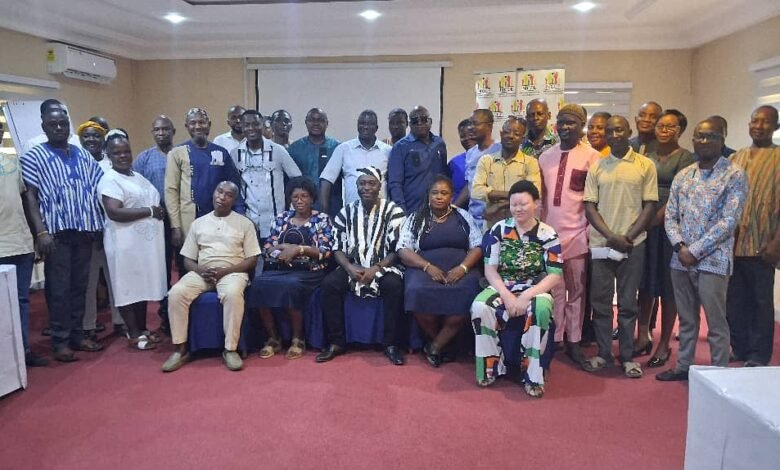
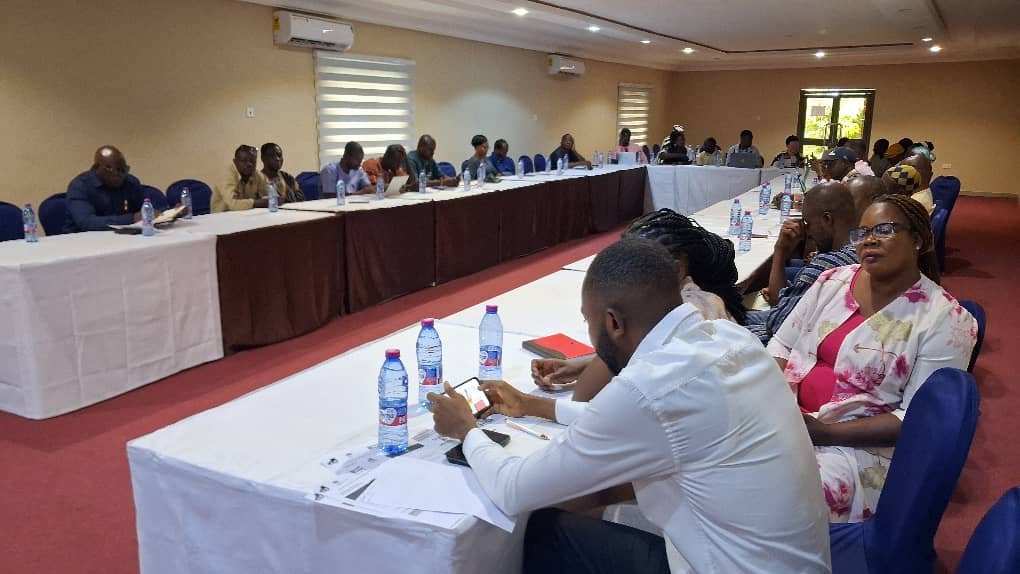
The call came during a forum organised by CDD-Ghana in collaboration with the National Commission for Civic Education (NCCE), with support from the Foreign, Commonwealth & Development Office (FCDO). The forum brought together political analysts, civil society actors, and regional leaders to examine gaps in existing laws and explore measures to promote transparency, accountability, and inclusivity in political party financing.
Delivering the opening remarks, Mr Augustine Akugri, Deputy Upper East Regional Director of the NCCE, stressed that the monetisation of politics has become deeply entrenched, posing an existential threat to democracy in Ghana.
“We are witnessing both the supply of money to voters and the demand for money from voters in elections and party primaries. This undermines merit and distorts democracy,” he said.
Mr Akugri highlighted findings from studies conducted by CDD-Ghana and the Westminster Foundation for Democracy, which show a sharp rise in the cost of political participation across electoral cycles. He emphasised that excessive financial demands on candidates disproportionately favour individuals with access to wealth, effectively sidelining otherwise qualified citizens who could serve the public.
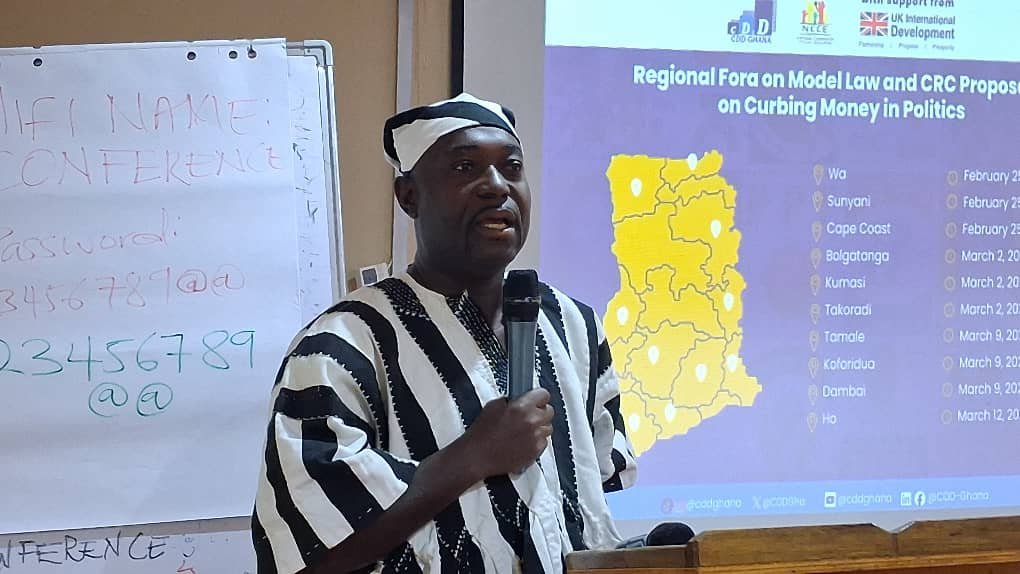
Expanding on this, Mr William Nyarko, Executive Director of the Africa Center for International Law and Accountability (ACILA), advocated for the creation of an independent body to regulate political parties and monitor campaign financing. He pointed out that a significant portion of contributions—estimated at 90 percent—goes directly to candidates, yet current laws do not compel them to disclose such funding publicly.
“About 90 per cent of contributions go directly to candidates, but they are not required to report them. That weakens transparency and accountability,” he said.
Mr Nyarko recommended the introduction of spending limits, contribution caps, clearly defined campaign periods, and stricter enforcement mechanisms, including sanctions for non-compliance. He argued that without such measures, the influence of political financiers—often with opaque funding sources—continues to distort democratic representation.
Highlighting the financial pressures of electoral contests, Mr Ahuno, another expert speaker, noted that the cost of parliamentary contests has increased significantly, while presidential campaigns are now estimated at around US$100 million. He described this trend as a “crisis of democratic capture,” explaining that as campaign costs rise, women, youth, and persons with disabilities are disproportionately excluded from political participation.
“When campaign costs keep rising, vulnerable groups are eliminated. More dangerously, we see the influence of political financiers whose funding sources are often opaque,” Mr Ahuno said.
He further pointed out that existing legislation, including provisions under Article 55 of the 1992 Constitution and the Political Parties Act, primarily regulate political parties but fail to adequately cover individual candidates.
“As it stands, candidates who receive donations are not required to account for them. The law does not clearly define a campaign period or set spending limits. That is a major regulatory gap,” he noted.
The forum underscored the urgent need for comprehensive legislation aimed at closing these gaps and strengthening democratic governance. Participants called for measures that would ensure political offices are accessible based on merit rather than wealth, protect vulnerable groups, and promote transparency in political financing.
The discussions also emphasised the broader implications of unchecked monetisation, including its potential to undermine electoral integrity, erode public trust, and perpetuate a cycle where political power is increasingly concentrated among the wealthy.
Stakeholders concluded by urging the government, lawmakers, and civil society to collaborate on developing and enforcing robust regulatory frameworks that will safeguard Ghana’s democracy and make political participation more inclusive.
Source: BlueWaves Radio 93.7 FM | Maurice Duncan