The deputy Chief Executive Officer of the Ghana Enterprises Agency (GEA) has challenged young women entrepreneurs in the Bolgatanga Municipality to transform the Upper East Region into a thriving hub for agro-processing, reversing the decades-long trend of youth migrating south in search of low-paying, menial jobs.
Delivering the keynote address at a business support and equipment distribution ceremony in Bolgatanga, the CEO urged beneficiaries to treat the start-up tools handed to them as the foundation for scalable family enterprises rather than items for social ceremonies.
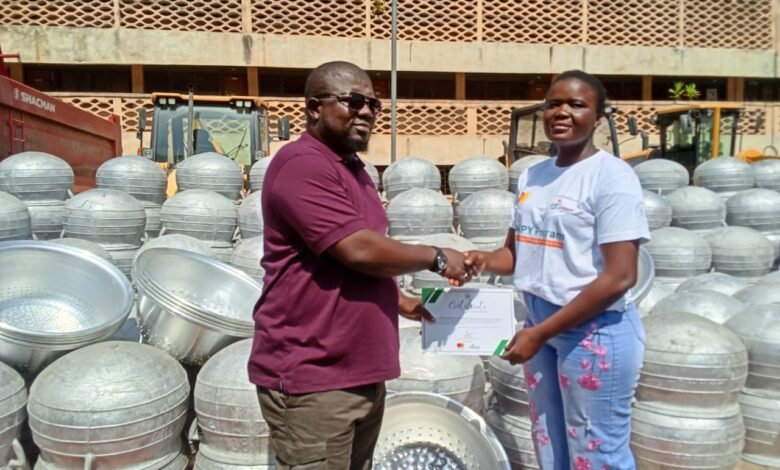
The intervention was organized under a strategic partnership between the Ghana Enterprises Agency, Agri-Impact, and the Mastercard Foundation, targeting young women in the agro-processing value chain. Beneficiaries received essential processing equipment, including rice milling basins, to boost local production capacity.
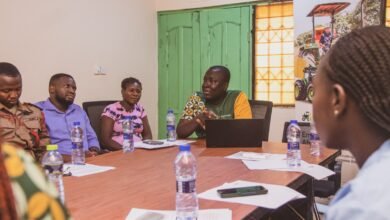
Addressing an audience comprising young entrepreneurs, local government officers, and the Municipal Chief Executive (MCE), the GEA CEO reminded participants of the Upper East Region’s rich agricultural history.
He noted that the region was once an economic magnet where workers from the Upper West Region migrated to find employment on thriving rice and tomato farms. However, those industries collapsed because they were not deliberately structured and developed into sustainable cooperatives.
“Today, our young people travel down south only to end up in menial jobs, such as selling soya koko for as little as five Ghana cedis a day—even though the very soya beans and nutritious rice they rely on are cultivated right here in our region,” the CEO stated. He emphasized that the overarching vision of the partnership is to rebuild Bolgatanga into an industrial destination that attracts labor from elsewhere, rather than exporting its youth.
As the lead government institution mandated to promote Micro, Small, and Medium Enterprises (MSMEs) which account for approximately 90 percent of all businesses in Ghana the GEA underscored that donor and state support is strictly performance-driven.
The CEO explained that demonstrable results from current beneficiaries are necessary to unlock future funding pipelines, while poor stewardship threatens continued investment in the region. To that end, he issued a stern warning against diverting the distributed processing equipment for non commercial social obligations.
“These items are strictly for business growth. Do not use them to settle bride price (leafy) obligations, do not donate them to women’s associations, and do not present them as gifts at funerals or naming ceremonies,” he cautioned, urging the women to augment the agency’s support with their own capital and commitment.
To ensure long-term sustainability and break the cycle of poverty in northern Ghana, the CEO advocated for a family-business model in rice processing. He encouraged the young women to involve their siblings during school vacations across the entire value chain from parboiling and drying to milling and bagging to build resilient, multi-generational businesses.
Looking ahead, the CEO announced that the GEA is preparing to roll out the Women Market Fund in 2027. He stressed that the upcoming facility will strictly target serious, growth-oriented ventures rather than businesses existing “in name only.” He tasked the Municipal Chief Executive to actively position Bolgatanga to secure a substantial quota of the fund when it launches.
Concluding his address, the CEO charged municipal and field officers present at the ceremony to carry the message of accountability, value addition, and enterprise discipline to adjoining beneficiary districts across the region.
source: Mybluewavesonline.Com/ Maurice Duncan/ Bolgatanga