
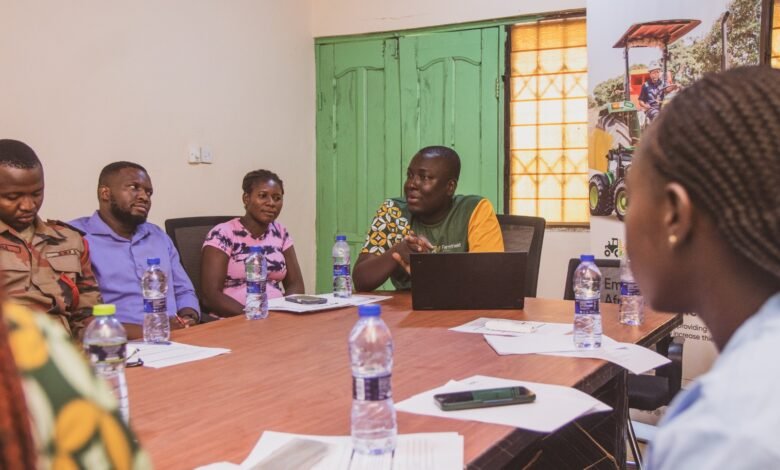
FarmYield Ghana has launched the second phase of its One Youth One Acre programme, expanding its flagship youth agribusiness initiative aimed at building a new generation of agricultural entrepreneurs in the Upper East Region.
FarmYield Africa is an agricultural development organisation focused on transforming smallholder farming in northern Ghana into a sustainable and profitable enterprise. Through initiatives in mechanisation, input financing, farmer support, and market access, the organisation works to improve productivity, strengthen livelihoods, and build resilient agricultural systems across northern Ghana.
Speaking at a brief orientation ceremony, Chief Operations Officer Emmanuel Nsobila said the programme has been deliberately designed to go beyond traditional farming support and equip participants with the skills needed to run agriculture as a business.
“We started last year with 10 youth, and this year we have increased the number to 20, with 20 acres of land allocated across blocks for each participant,” he said. “We provide all the necessary support, starting with land and quality seeds, and we have a team that will guide participants through the entire process, from land preparation to harvesting.”
He explained that the programme integrates both practical and business-focused training.
“The goal is to guide participants through the full process, not only the practical aspects of farming, but also marketing, record keeping, bookkeeping, and accounting. We want to build an entrepreneurial mindset, not just train farmers.”
Mr. Nsobila also highlighted growing interest from external partners, noting that several international organisations have expressed interest in supporting the initiative.
“Some partners are already looking at supporting participants after the training, including business registration and access to financial services. This year, participants receive practical training, and next year, they will farm independently with continued input support from us.”
Participants selected for the six-month programme expressed a range of expectations, reflecting both their diverse backgrounds and shared ambition to succeed in agriculture.
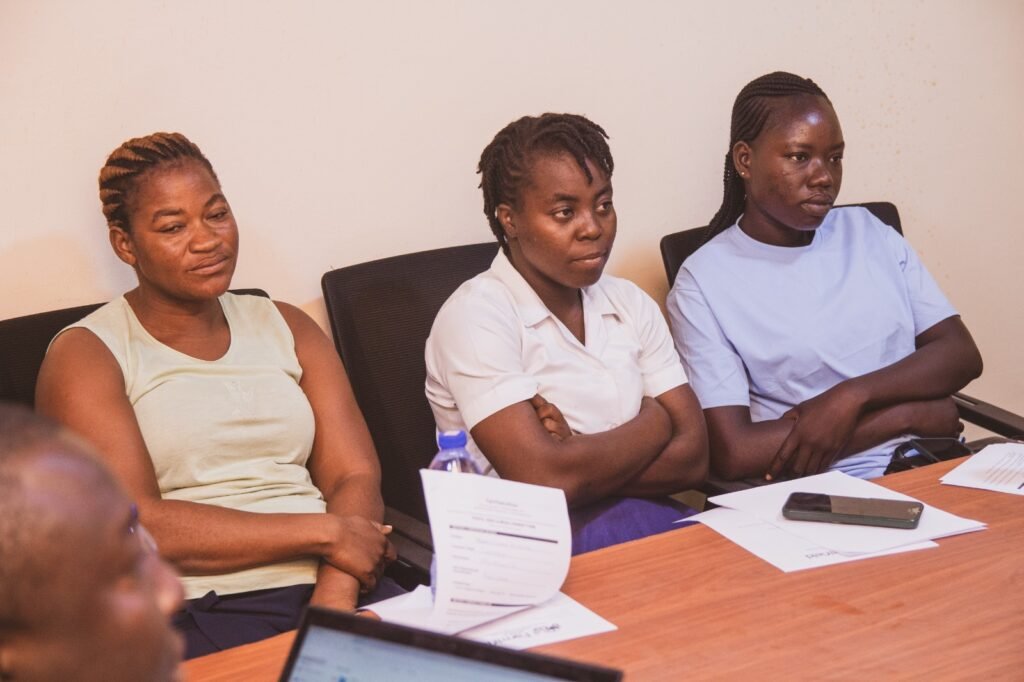
Felix Adombila Nsoh said he hopes to gain knowledge that will support vulnerable groups.
“My expectation is to have more knowledge about agripreneurship for sustainable livelihoods for small-scale farmers, especially women, youth, and persons living with disability,” he said.
For Ibrahim Abdul-Wahab, the focus is on strengthening food production and food security.
“I expect that at the end of the programme, FarmYield Africa equips me with both theoretical and practical knowledge to help me farm more cereals and support northern Ghana’s food security journey,” he said.
Saviour Aniileina Agambire emphasised the importance of technical knowledge in crop production.
“I want to gain knowledge in the production of maize, other grains, and food crops in general,” he said.
Dorcas Apugi, who already has some farming experience, said she hopes to improve her current practices.
“At the end of the six-month programme, I expect to gain more knowledge about growing food and improve on my current farming activities,” she said.
Background: One Youth One Acre Initiative
The One Youth One Acre initiative is a youth-focused agricultural development programme implemented by FarmYield Ghana to address barriers such as limited access to land, inputs, and technical support, particularly among young people and women.
Under the programme, each participant is allocated one acre of farmland within a structured block farming system and supported with mechanisation services, quality inputs including seeds, fertilisers, and herbicides, as well as continuous agronomic guidance.
In addition to practical farming support, participants receive training in good agronomic practices, climate-smart agriculture, business management, and record-keeping. The programme also includes mentorship and empowerment sessions designed to build confidence and leadership among youth.
To address market challenges, the initiative facilitates market access through aggregation centres, enabling participants to sell produce at fair and competitive prices.
The programme aims to increase agricultural productivity, improve incomes, enhance food security, and reduce rural-urban migration by creating viable opportunities for young people within their communities.
Source: BlueWaves Radio 93.7FM| Kwasi Ahumah Smith