By Comfort Nmaah Adongo
The newly capitalized Women’s Development Bank will decentralize its operations across Ghana by establishing one branch in every district, directly embedded within newly designed 24-hour modern markets, including 15 branches earmarked for the Upper East Region, according to Mr. Michael Nangena, a member of the National Democratic Congress (NDC) communication team.
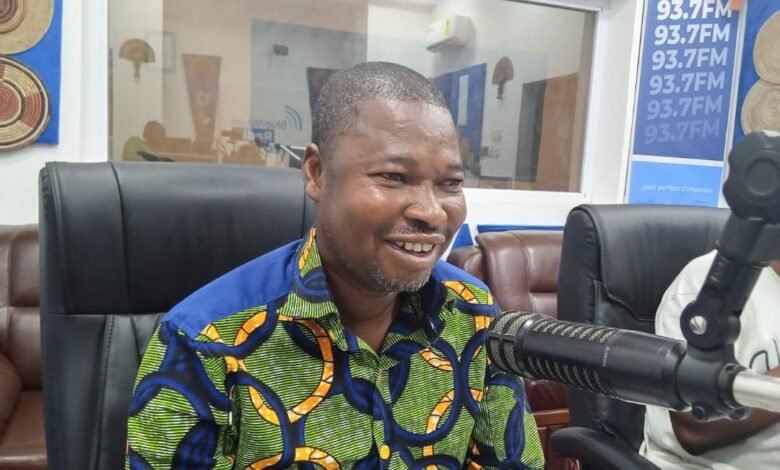
Speaking during an exclusive interview on Blue Waves Radio’s morning show, Mr. Nangena outlined the structural and financial framework driving the rollout. He explained that following initial seed funding allocations under the C Fund in the 2025 national budget and full capitalization in 2026, the bank is deliberately moving away from the traditional model of centralizing major financial institutions in Accra. Instead, the bank is adopting a grassroots, district-by-district presence designed to place banking halls directly inside local commercial hubs where market women, traders, and small-scale entrepreneurs conduct their daily transactions.
For decades, women operating in Ghana’s informal and semi formal trading sectors have faced steep barriers to formal credit, including long travel distances to regional capitals, rigid collateral demands, and banking hours that conflict with peak market activity. By embedding the Women’s Development Bank directly inside modern market complexes across every district, the initiative eliminates the physical and operational distance between female entrepreneurs and formal financial services. Traders will be able to deposit daily earnings, access working capital, and manage business accounts within steps of their stalls.
With 15 administrative districts in the Upper East Region—spanning municipalities and districts such as Bolgatanga Municipal, Bawku Municipal, Kassena-Nankana Municipal, Bawku West, Builsa North, and Bongo—the allocation of 15 branches guarantees complete regional coverage. In an agrarian and trade-driven economy like the Upper East, where women form the backbone of shea processing, grain trading, vegetable farming, and cross-border commerce, decentralized access to tailored credit is expected to significantly expand household incomes and local enterprise growth.
Mr. Nangena emphasized that the banking rollout is inseparable from a broader transformation of market infrastructure aimed at operationalizing Ghana’s 24-hour economy agenda. Rather than constructing conventional open-air stalls or basic sheds, the government is designing these modern markets as comprehensive, self-contained commercial ecosystems capable of sustaining round-the-clock economic activity.
At the core of each facility’s commercial infrastructure is the integration of the Women’s Development Bank banking hall alongside dedicated cold storage facilities and modern lockable stores. For traders in northern Ghana and across the country, post-harvest losses—particularly in perishable goods such as tomatoes, onions, leafy vegetables, fresh fish, and meat regularly erode profit margins. Access to reliable on site cold stores will allow traders to preserve inventory over longer periods, stabilize market supply, and sell produce at competitive prices rather than rushing to clear stock at a loss before nightfall. Meanwhile, secure lockable stores will enable merchants to safely store high-value goods overnight, removing the daily burden of packing and transporting wares back and forth.
Beyond physical trading and storage spaces, Mr. Nangena noted that the architectural blueprint of the modern markets directly addresses the social and caregiving realities that often limit women’s economic participation. Each market complex will incorporate an on-site crèche, giving nursing mothers and traders with young children access to safe, professional childcare within the market perimeter. By relieving women of the constant tension between caring for their children and attending to customers, the crèches are expected to boost daily productivity and allow more women to participate in extended trading shifts.
Healthcare and personal wellness are also built into the market ecosystem. Every facility will house a pharmacy, a health post, and a fitness gym, ensuring that traders, transport operators, and shoppers have immediate access to primary medical care, essential medications, and wellness services without leaving the commercial center. For market women who often spend twelve or more hours a day on their feet, accessible on-site healthcare addresses preventative care and urgent medical needs that might otherwise go untreated due to lost trading time.
To make genuine 24-hour commerce viable, Mr. Nangena stressed that security and emergency preparedness cannot be treated as afterthoughts. Each modern market will feature dedicated police and fire posts embedded directly within the market grounds. A permanent police presence will deter theft, protect night-shift traders and shoppers, and ensure orderly transit around late-night commercial zones. Simultaneously, an on-site fire post equipped for rapid response directly confronts one of the most devastating recurring threats to Ghanaian markets—commercial fires that frequently wipe out years of uninsured trader investments overnight.
Together, the decentralized Women’s Development Bank branches and the integrated 24-hour modern markets represent a coordinated shift in how local commerce is financed, protected, and sustained. By uniting accessible capital, cold-chain preservation, childcare, healthcare, and round-the-clock security under one roof across all 15 districts of the Upper East Region and nationwide, the initiative aims to dismantle the structural bottlenecks holding back female entrepreneurs while turning local markets into continuous engines of district level growth.
Source: Mybluewavesonline.Com/ Maurice Duncan/ Bolgatanga