The government bears primary responsibility for creating an economic environment that generates jobs for young people, and citizens must stop blaming the wrong people while allowing politicians to escape scrutiny, a leading Upper East Region community advocate has said.
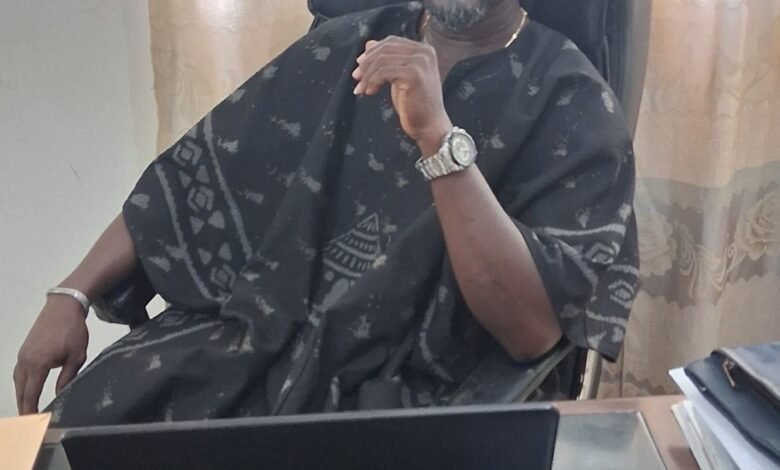
Dr. Esmond Agurgo Balfour, regional chairman of BONABOTO a non-partisan development association focused on the Bolgatanga, Nabdam, Bongo and Tongo areas made the remarks on the Bluewaves Breakfast Show. He argued that when young people struggle to find work, they often fault civil society groups or private individuals rather than elected leaders who promised better livelihoods during campaigns.
“It is the government of the day’s responsibility to ensure the economic environment is conducive enough to create jobs for the people,” Balfour said. “Yet when a youth struggles to find employment, they blame the wrong people… Until we face this problem head-on, we will continue to lament wrongly.”
He noted that voters queue to elect politicians who pledge improved education, health services, roads, water and jobs, only to later overlook those unfulfilled commitments. Instead of confronting leaders, many accept token handouts when politicians return to their constituencies. Balfour called this a “comfort zone” that allows underperformance to continue.
“Imagine if the youth of Upper East truly understood their own power,” he said. “Imagine them rising up and saying: ‘This year, we don’t want to see you anywhere campaigning, because you failed us when we gave you the opportunity… We still have no roads… no water… no schools, no jobs.’ That would be a genuine call to duty.”
Balfour also criticised political parties’ internal structures, suggesting they sometimes fail to serve leaders or the public effectively.
Looking beyond immediate accountability, he reflected on Ghana’s failure to realise the agricultural industrialisation vision of the country’s first president, Kwame Nkrumah, for the Upper East Region. Nkrumah, who led Ghana to independence in 1957, promoted modernised farming, irrigation schemes and agro-processing in the northern savannah as part of broader efforts to industrialise the economy. Those ambitions largely stalled after his overthrow in 1966.
“We cannot speak of that legacy with pride today in truth, we have failed the Upper East Region on this front,” Balfour said.
He pointed to newer opportunities in mining. Gold deposits have been confirmed across much of the Upper East, beyond the established large-scale operations in Talensi District, where commercial mining is already underway. Rather than continuing to export raw gold only to import expensive finished jewellery, Balfour urged investment in local skills and facilities.
“We should be training our own people in gold processing. We should have our own gold refiners,” he said. “Must we keep shipping out raw gold, only to have it return to us processed and far more expensive…? We could instead invest in processing our own gold into the very ornaments we want to buy.”
Marking a day of remembrance for Nkrumah, Balfour stressed that celebration alone is insufficient. “If what he left behind is not continuing to function, then we are failing him, regardless of how much we celebrate him in words. Let us ensure that his legacy is not just honoured, but is actively working, delivering, and fulfilling the purpose for which he gave his best.”
Youth unemployment remains a pressing challenge across Ghana, while the Upper East Region continues to grapple with infrastructure deficits even as mineral resources attract growing commercial interest. Balfour’s comments add to ongoing local debates about governance, resource value addition and the need for citizens to demand results from elected officials.
By: Gayheart Abraham
Source: Mybluewavesonline.com/ Maurice Duncan/ Bolgatanga