Stakeholders in the Kasena Nankana West District have expressed concern over the low turnout during this month’s National Sanitation Exercise in Chiana, calling for stronger community mobilisation ahead of future clean-up campaigns.
The exercise, held at the Chiana Market Centre, along major streets, and in other parts of the community, formed part of the National Sanitation Day initiative observed on the first Saturday of every month under the government’s “Clean Up Ghana” agenda. The initiative seeks to promote environmental responsibility, improve public health, and reduce sanitation-related disease outbreaks through collective community action.
Despite its importance, organisers described attendance as disappointing, noting that students constituted the majority of participants. The low turnout has raised concerns about the level of adult and general community involvement in the monthly exercise.
Assemblyman attributes turnout to farming season
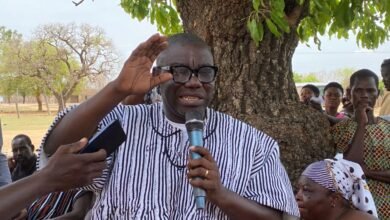
The Assembly Member for the Chiana Central-Alonia/Asonia Electoral Area, Hon. Robert Wejegedam Bagoni Nawurah attributed the poor participation largely to the ongoing harvesting season, explaining that many residents, particularly farmers, were engaged on their farms.
“Many of our people are currently busy with harvesting activities on their farms, and that has affected turnout. However, this exercise is for the good of the entire Chiana community,” Hon. Wejegdam said.
He dismissed suggestions that political differences were responsible for the low participation, insisting that sanitation should remain a shared community responsibility rather than a partisan issue.
“I disagree with those who say the low turnout is because of political differences. This exercise is not about politics; it is about the health, dignity, and development of Chiana,” he stated.
Call for stronger mobilisation.
Hon. Wejegdam stressed the need for assembly members, chiefs, and other traditional authorities to work together to sensitise residents and encourage greater participation in future exercises.
According to him, information about the exercise was disseminated across the community, including to women’s groups, the youth, and other opinion leaders. He, however, said the efforts had not produced the desired response.
“We sent information across the entire community, including women’s groups, the youth, and other opinion leaders, but the response has not been encouraging. We must all come together—chiefs, assembly members, opinion leaders, and residents—to make sanitation a priority,” he said.
The Assembly Member urged residents to see the monthly clean-up not merely as an assembly activity, but as a collective effort to protect public health and improve the living environment.
National Sanitation Day context.
National Sanitation Day is observed nationwide on the first Saturday of every month as part of the “Clean Up Ghana” agenda. Activities typically include sweeping streets, desilting drains, clearing weeds, removing refuse, and cleaning markets, lorry parks, commercial centres, and residential areas.
The initiative, relaunched in September 2025, is spearheaded by the Ministry of Local Government, Chieftaincy and Religious Affairs, and is intended to foster a culture of environmental responsibility while improving public health and community aesthetics.
Way forward.
Stakeholders in Chiana are therefore calling for more coordinated mobilisation ahead of subsequent exercises, with greater involvement of traditional authorities, market associations, women’s groups, youth groups, and residents.
They believe that improved sensitisation, early planning, and active leadership from community leaders will help boost participation and ensure that future National Sanitation exercises achieve a more meaningful impact in Chiana.
The Honourable Assembly member also appeals to the NGOs, philanthropists, CSOs and all well meaning Ghanaians.
Source: Mybluewavesonline.Com/ Maurice Duncan/ Bolgatanga