NAVRONGO, UPPER EAST REGION — A proposal has been put forward for the establishment of a Navrongo Trade Hub (NATH) aimed at economically empowering women, promoting local production and ensuring that communities in the Kassena-Nankana area benefit more directly from the value generated from their natural resources and traditional skills.
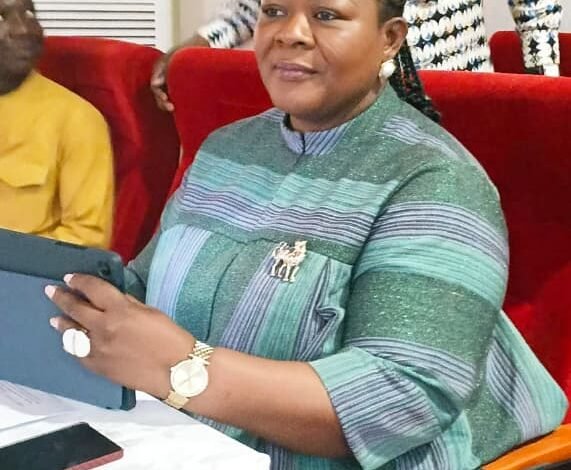
The proposal was presented on behalf of Lawyer Anatu Seidu Bogobiri, Deputy Chief Executive Officer of the National Health Insurance Authority (NHIA), at the 2026 Navrongo FAO Development Dialogue, held under the theme: “Celebrating Culture, Driving Development: Harnessing Local Resources and Talent for Sustainable Development.”
The proposed initiative seeks to create a structured platform where women can produce, process, package, brand and market locally produced goods, with an initial focus on shea products, commercial vegetable farming and smock weaving.
Presenting the proposal, the speaker argued that the major challenge confronting many women in the Kassena-Nankana area was not a lack of hard work or talent, but their limited access to profitable markets and value addition opportunities.
According to the presentation, women often remain at the beginning of the production chain, selling raw materials at relatively low prices while other players generate greater wealth through processing, branding and marketing.
Tono Irrigation Scheme
The proposal identified the Tono Irrigation Scheme as a major asset that could support the development of commercial agriculture in the area.
The speaker noted that although the scheme has significant irrigable land and supports thousands of farmers, much of the agricultural activity has traditionally focused on rice production.
The presentation attributed the decline in vegetable production partly to the absence of reliable markets for farmers.
It argued that farmers who previously cultivated vegetables suffered losses when produce remained unsold and eventually spoiled, discouraging them from continuing with vegetable farming.
The proposed Navrongo Trade Hub would therefore seek to introduce off-taker arrangements, ensuring that markets are secured before farmers begin production.
Shea Processing
Shea processing was identified as one of the major areas of opportunity under the proposed hub.
The initiative proposes the establishment of a Shea Processing Park equipped with modern facilities for crushing, roasting and extracting shea butter to meet quality standards.
Beyond producing shea butter, the proposal seeks to support women to manufacture finished products including soaps, creams, lotions and oils, allowing them to capture more value from the shea value chain.
The initiative would also seek to attract private investors to partner with women as business partners rather than simply purchasing raw shea nuts from them.
Commercial Vegetable Farming
The proposed hub would also organise women farmers into supply groups and facilitate access to improved seeds, agricultural inputs, extension services and mechanisation.
Women would be supported to access equipment such as tractors, power tillers and water pumps, as well as irrigation facilities connected to the Tono Irrigation Scheme and community gardens.
A key component of the proposal is the introduction of guaranteed off-taker agreements, which would reduce the risk of farmers producing crops without secured markets.
The presentation also called for the elimination of cultural perceptions that discourage women from cultivating certain crops.
The speaker stressed that farming should not be restricted by gender, arguing that women should be given equal opportunities to participate in profitable agricultural ventures.
Smock Weaving and Cultural Enterprise
The proposal also places significant emphasis on smock, or Fugu, weaving, describing the traditional garment as both a cultural symbol and a potential economic industry.
Under the proposed arrangement, women involved in the Fugu value chain would be organised under a cooperative structure and supported with modern weaving equipment and improved production techniques.
A common finishing and branding centre would also be established to ensure that products meet consistent quality standards and are suitable for both domestic and international markets.
The proposal envisages a situation where buyers from Accra and international markets could place large orders for standardised Fugu products through a single organised platform.
Facilities and One-Brand Strategy
The proposed Navrongo Trade Hub would include warehouses, storage facilities, a packaging and labelling unit, exhibition and retail space, washrooms, a meeting and training hall, and a crèche for nursing mothers.
The inclusion of a crèche, according to the proposal, is intended to make the facility more accessible to women with young children.
The initiative would also operate under a unified marketing platform, combining digital and traditional marketing channels to promote products from the hub within Ghana and beyond.
The proposal argues that bringing producers together under one brand would strengthen their bargaining power, improve product standards and enable them to negotiate better prices with buyers.
Accountability and Sustainability
Anticipating concerns over the sustainability of cooperative initiatives, the proposal outlined four measures intended to distinguish NATH from previous interventions.
These include investment in shared assets rather than individual gifts, securing markets before production, developing a unified brand and maintaining transparent financial management.
The proposed hub would also be expected to publish its accounts and provide annual reports to the community.
Calls for Stakeholder Support
The proposal called on the Kassena-Nankana Municipal Assembly to designate land for the project and incorporate the hub into its medium-term development plans and budget.
The Navrongo Traditional Council was also urged to make available suitable land for the project.
Development partners, including the organisers of the FAO Development Dialogue, were encouraged to support the preparation of a feasibility study and business plan as well as the acquisition of initial common-user processing equipment.
Private sector players and strategic investors were also encouraged to partner with women under the initiative.
The proposal further urged women in the area to organise themselves, register with the hub and maintain high standards in production.
Call for Immediate Action
The presenter called for the establishment of a working committee to take the proposal forward, stressing that development ideas could only become reality when they were backed by clear responsibilities, timelines and accountability.
The proposed Navrongo Trade Hub is expected, if implemented, to contribute to women’s economic empowerment, job creation, youth skills development, increased household incomes and export opportunities in the Kassena-Nankana area.
The proposal concluded with a call for stakeholders to shift from viewing women primarily as beneficiaries of development interventions to recognising them as producers, entrepreneurs and partners in economic development.
The speaker maintained that the women of Kassena-Nankana were not seeking charity but opportunities to move higher up the value chain and benefit directly from the wealth generated from their labour and resources.
Source: Mybluewavesonline.com/Maurice Duncan / Bolgatanga